OTOPLASTY
Otoplasty — also known as cosmetic ear surgery or ear reshaping — is a procedure to change the shape, position or size of the ears. It is a surgical procedure designed to give the auricle a more natural and anatomic appearance.
Why is ear plastic surgery done
Congenitally prominent ears are a cosmetic deformity that can have a severe emotional and behavioral effect on a child: being teased or even bullied because of “sticking-out ears” can affect a child’s self-confidence, their emotional well-being, and their behavior. Even adults with protruding ears can feel embarrassed to the point where it affects their everyday lives.
Ear deformities occur for a number of reasons, such as overdevelopment or underdevelopment of the cartilage and injury. The protruding ear as a minor ear abnormality is found in approx. 5% of the general population. Protruding ears may run in families, but they often occur randomly (around 30 percent of children with prominent ears have ears that appear normal at birth, but the unusual shape can appear in the first 3 months). Some of those deformities are self-correcting, while other require an otoplasty or a non-surgical correction.
Ear plastic surgery candidates
You might choose to have otoplasty if you’re bothered by how far your ears stick out from your head. You might also consider otoplasty if your ear or ears are large in proportion to your head or misshapen due to an injury, birth defect or previous ear surgery. Otoplasty won’t change the location of your ears or alter your ability to hear.
Candidates for otoplasty may be those who feel self-conscious about their ears and want to improve their appearance. It is also important that you are in good general health, and have realistic expectations about the outcome of the procedure.
Otoplasty can be done at any age after the ears have reached their full size — usually after age 5 or 6 — through adulthood. In some cases, the surgery is done as early as age 3 (children younger than four are normally not candidates since their ears are still growing).
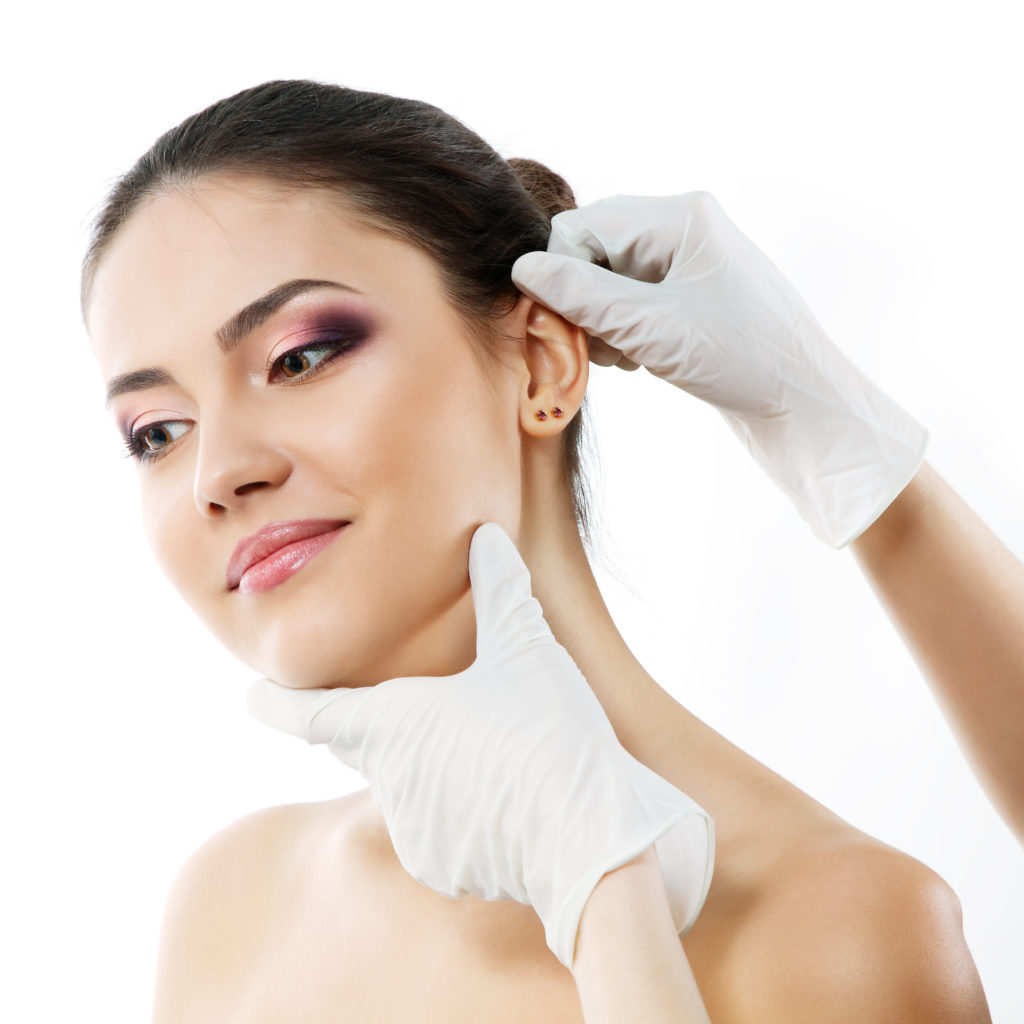
How otoplasty (ear pinning) is performed
Ear plastic surgery typically serves two functions: setting prominent ears back closer to the head, and reducing the size of large ears. It can be also helpful for correction of large or protruding ears, lop ear (top of the ear folds downward or inward), cupped ear (a small ear), shell ear (no outer curve in the cartilage), stretched or torn earlobes.
There are three main types of otoplasty: ear augmentation (it is needed if the pinna is underdeveloped or non-existent), Otopexy (an ear pinback that “flattens” protruding ears) and ear reduction (reduces the pinna when it is too big). The choice of the surgical procedure is based on the severity of the ear abnormality and the individual characteristics of the auricular cartilage. The operation generally lasts two to three hours and is performed on an outpatient basis. The type of anesthesia used typically depends on the age of the patient – general anesthesia is recommended for very young patients, while local anesthesia and a sedative may be used for older children and adults.
An otoplasty is normally a safe and successful procedure, with high satisfaction rate (German researchers from Department of Otorhinolaryngology in Saarland University in Hamburg found that people who underwent otoplasty to reduce protruding ears felt they had a better quality of life after the operation).
Ear correction surgery recovery
Compared to other plastic surgical procedures, recovering from otoplasty is often less intensive. After otoplasty, your ears will be covered in bandages for protection and support. A few days after otoplasty, your doctor will remove your bandages. Your ears will likely be swollen and red. You’ll need to wear a loose headband that covers your ears at night for two to six weeks.
After about one week following otoplasty, children may return to school, and adults may return to work and resume normal daily activities.
Benefits of ear surgery
The procedure is safe, with little or no risks involved. It can correct a wide variety of ear imperfections and ensure enhanced confidence and self-esteem. The procedure itself has minimal downtime - approximately one week and minimal scarring once healed, with natural-looking results.
The procedure should only be performed by an experienced plastic surgeon, and can have a dramatic impact on a person’s appearance, confidence, and overall quality of life.
Ear surgery cost (price)
Otoplasty cost can vary widely. The average fee does not include anesthesia, operating room facilities or other related expenses. A surgeon’s cost for ear surgery may vary based on his or her experience, the type of procedure used, as well as geographic location.
Plastic surgeon prof. Dr Milan Jovanovic
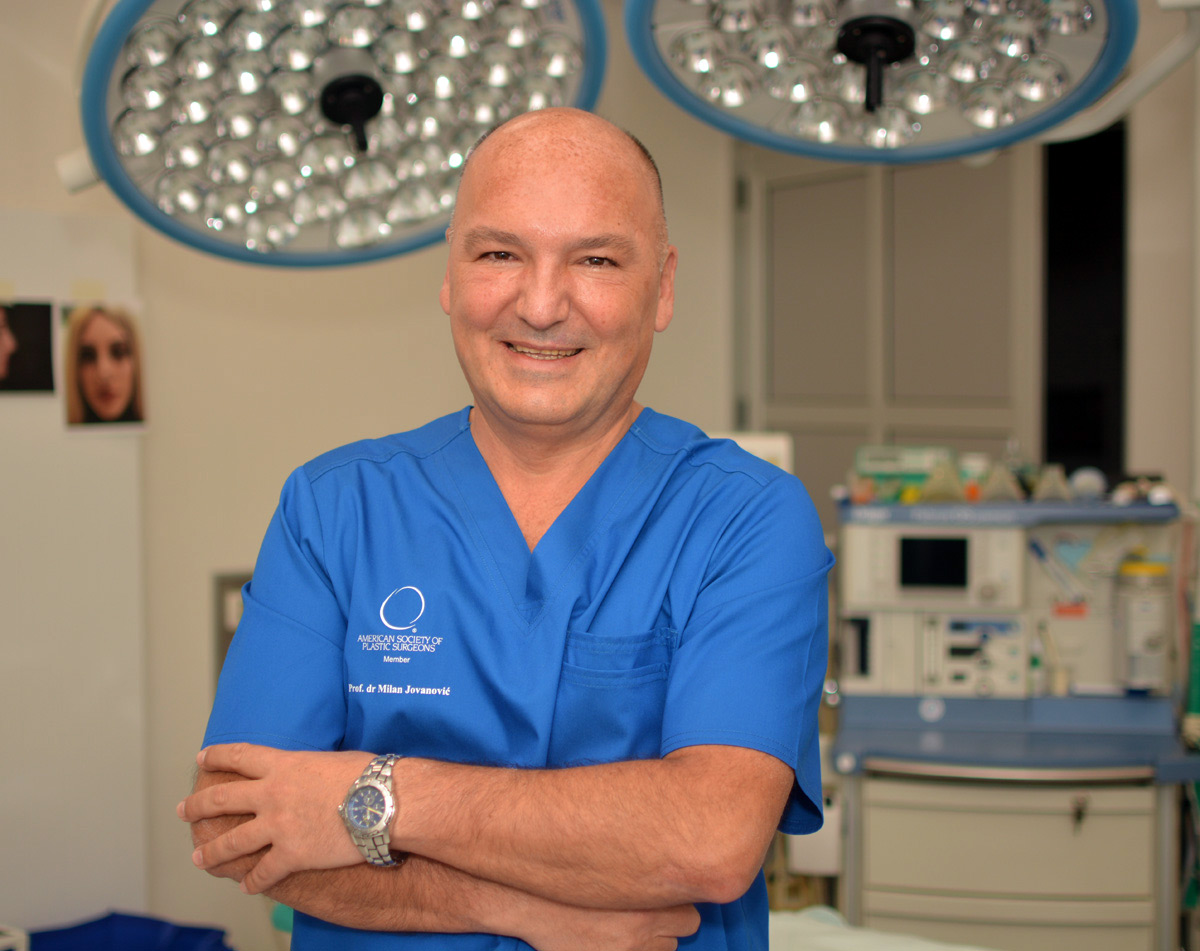
Prof. Dr Milan Jovanovic is a specialist in plastic reconstructive and aesthetic surgery. As a surgeon with 27 years of surgical experience, Dr Jovanovic is one of the best experts in anti-ageing, plastic, reconstructive and aesthetic surgery in the region.
He is a professor at the Faculty of Medicine, University of Belgrade, where he teaches general education to students of the fifth year, as well as at the postgraduate education for doctors who specialize in the field of plastic, reconstructive and aesthetic surgery. He is the Head of the Department of Plastic, Reconstructive and Aesthetic Surgery at the Faculty of Medicine, University of Belgrade.
Others About Us

Prof. Dr. Jovanovic and his team made me feel welcome and at ease. I had liposuction of fat and glandular tissue to correct gynecomastia, and I also had a few moles removed - all under local anesthesia. It was not the most pleasant experience (just mildly uncomfortable - I suggest taking an oral sedative beforehand). Most importantly, however, the results are outstanding. I am very happy that I found Prof. Dr. Jovanovic, and I am happy to give him my highest recommendation. Thanks Prof. Dr. Jovanovic
Michael, USA
MI OPINION SOBRE LA ATENCION HOSPITALIARIA Y POR LA ATENCION PROFECIONAL. MI OPINION SOBRE LA ATENCION DEL CIRUJANO ES EXCELENTE Y NO TENGO PALABRAS PARA A GRADECERLE LA FORMA QUE ME A ATENDIDO,ES UNA PERSONA HUMILDE,ATENTO, Y MUY PROFECIONAL CON TU TRABAJO,. QUE ESTA LAS 24 HORAS PENDIENTE DE SU PACIENTE.,SI TENGO QUE RECOMENDAR LO HARIA SIN DUDARLO . SOBRE EL SERVICIO HOSPITALARIO COMO LOS ENFERMEROS, PERSONAL DE LIMPIEZA, RECEPCIONISTA TAMBIEN EXCELENTE ... LO UNICO SI ES DE MODIFICAR ALGUNA INSTALACIONES DEL HOSPITAL, COMO LAS ESCALERAS DEL SECTOR DE CIRUGIAS, Y EL MANTENIMIENTO EN GENERAL DEL HOSPITAL. APROVECHO PARA MANDAR UN SALUDO CORDIAL. AL DOCTOR JOVANOVIC . ATENTAMENTE.
Josefina Segovia Gonzalez de España, Spain, Madrid
Dr. Hirurg preformed a tummy tuck on me June 11,2015. I have come from the United States on the recommendation of a friend to Dr. Hirurg. His competency is above 100%. I received complete and accurate information. Everything was done in a timely manner. I found him compassionate and concerned for me and my recovery from my first consultation through my full recovery. In the States a tummy tuck is an sameday surgery. You have surgery and go home after the recovery room. Dr. Hirurg plan is a 3 day stay in his clinic where the surgery is done and after the recovery room I stayed in a hospital room for three days with my knees up and two j.p.tube for drains. I was place in front of the nursing station, which made me feel very safe. I have been a smoker for 10 years. After recover I had a respiratory: distress episode. Dr. Hirurg was called. I had the anesthologist and ICU nurse at the bedside until it was successfully resolved. When I left the clinic I had no tubes. In the states I would have gone home with the tubes. I had dressing changes by my doctor 3times a week until all my stitches were all out. I would recommend Dr. Hirurg with a 10 of 10 recommendation. Thank you Dr. Hirurg
Laurene Faulkner, USAHospital for plastic and aesthetic surgery
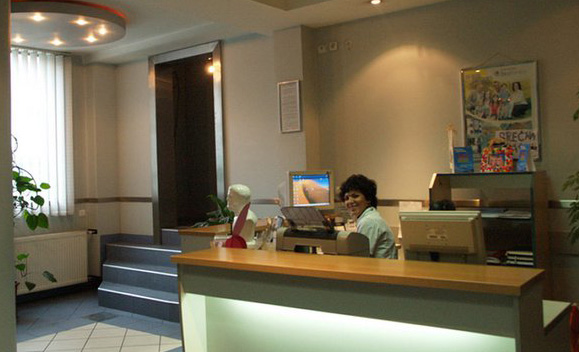
Health institution General Hospital – Medical System Belgrade – MSB is a system which combines all medical and dental specialties.
Exceptional and complete services in the fields of anti-ageing, plastic, reconstructive and aesthetic surgery are provided by the Center for Aesthetic Surgery MSB (Medical System Belgrade). Along with the necessary safety, quality, comfort and discretion, our main goal is – a satisfied patient.
Contact info
- Maglajska 30, Beograd
- 7:00 AM - 11:00 PM (Mon-Sun)
- +381 11 266 26 50
- +381 11 367 42 64
- +381 63 397 661
- plasticnihirurg@gmail.com
- www.plasticnaestetskahirurgija.com
- www.plasticcosmetic-surgery.net